Guides · the Charleston Tri-County
King tides in Charleston: why the street floods on a sunny day
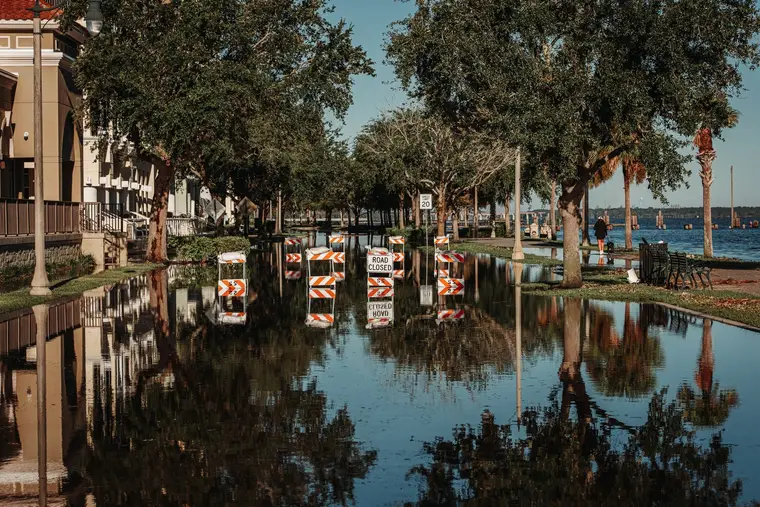
Every Charleston resident has seen it: a cloudless afternoon, and there's saltwater over the road anyway. That's not a drainage glitch — it's astronomy. The same tides that built the Lowcountry's marshes now push into streets, garages, and crawlspaces on a schedule you can read months in advance. Here's how spring tides and king tides actually work, what the numbers say about where this is heading, and what to do when tide water finds its way inside.
Spring tides: the moon's twice-a-month push
Tides are the ocean responding to the pull of the moon and sun. Twice a month, at new moon and full moon, the two line up and pull together, and the tidal range gets noticeably bigger — higher highs, lower lows. Those are spring tides. The name has nothing to do with the season; it's the old sense of water "springing forth." A few times a year, a spring tide lands while the moon is also at its closest point to Earth, and the high tides get bigger still — those outsized spring tides are what coastal communities call king tides. None of this needs a storm. It's gravity, on a calendar.
Why Charleston feels it more every year
A king tide only floods what sits low enough to reach — and Charleston keeps getting easier to reach. The NOAA tide gauge in Charleston Harbor has been recording for over a century, and the water now runs roughly a foot higher than it did a hundred years ago. That foot is the difference between a high tide that stops at the seawall and one that keeps going. The National Weather Service counted 89 coastal flood events at Charleston in 2019 — a record at the time, and a number that would have been unthinkable a generation earlier. Flooding that used to be a hurricane story is now a calendar story.
- NOAA's minor-flooding threshold at the Charleston Harbor gauge is 7.6 feet above the tidal datum; big king tides can clear it with clear skies.
- The highest tide crests on record at the gauge run above 8.5 feet — one recent king tide tied for the fourth-highest crest ever measured there, matching the storm surge of Hurricane David in 1979.
- Add an onshore breeze or a heavy rain landing at high tide, and low-lying streets flood well below those record numbers.
What tide flooding does to a house
Tide water is not rainwater. It's salt water that's crossed roads, yards, and storm drains on the way in — corrosive to fasteners, wiring, and appliances, and contaminated enough that soaked porous materials usually need removal rather than drying. The most common damage pattern we see isn't dramatic: a few inches in a garage, a flooded crawlspace nobody notices for a week, water wicking up through a ground-floor slab. The crawlspace version is the quiet one — salt water sits under the house, evaporates slowly into the framing, and shows up months later as musty rooms and mold.
If tide water gets in
- Don't wade through it barefoot — it's been through the storm-drain system and carries whatever the street carried.
- Photograph everything before cleanup, including the waterline outside and in.
- Know your policies: rising tide water is flood damage, which is excluded from standard homeowners policies and covered only by separate flood insurance (NFIP or private).
- Get salt-flooded spaces professionally extracted, rinsed, and dried — salt residue keeps pulling moisture from the air long after the water's gone.
- Check the crawlspace after any king tide that ponded near the house, even if the living space stayed dry.
You can see these coming
King tides are predictable months out — NOAA publishes the tide calendar for the Charleston Harbor gauge, and the City of Charleston maintains a king-tide page and flood-map tools that show which streets go under at which gauge heights. If your block or your crawlspace has flooded on a past king tide, the calendar tells you when to move vehicles, roll up garage contents, and check vents and seals — before the water arrives, not after.
Why we're named after this
Spring tides are the Lowcountry's oldest rhythm — the twice-monthly surge that shaped the marsh, and lately the reason your street floods on a sunny day. We took the name because that's the water problem this company is built around: local, predictable, and worth taking seriously before it's inside your walls.
About Spring Tide Restoration — 24/7 mold, water, storm & fire restoration across Charleston, Mount Pleasant, Summerville, Goose Creek, and the rest of the Tri-County (Charleston, Berkeley & Dorchester counties, South Carolina). On-site assessment before any work starts, and insurance-ready documentation on every job. Emergency line: (843) 825-9092.
Dealing with this now in the Charleston Tri-County?